
Chevalier Quixote Jackson: (1865-1958) Visionary Laryngologist and Laryngeal Surgeon in the 20th Century
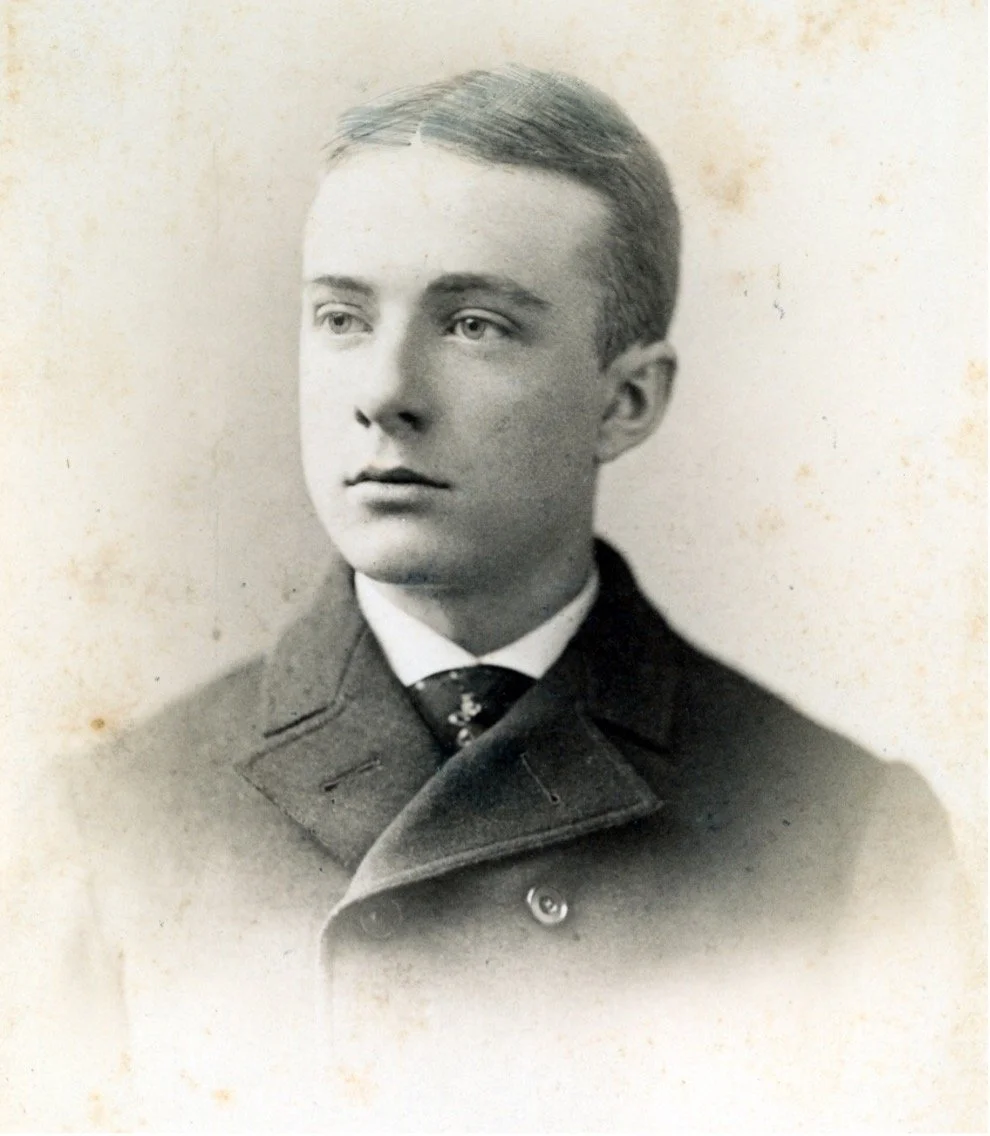
Young Chevalier Jackson (Zeitels Collection)
Chevalier Jackson (1865–1928) was born during the period when Louis Elsberg and Jacob Solis Cohen were pioneering advancements in laryngology and laryngeal surgery in the United States. The development of these disciplines in the United States was delayed by approximately seven years due to the Civil War.
Jackson received his medical degree in 1886 and began examining Solis Cohen's clinical practice and research. Upon relocating from Pittsburgh to Philadelphia, Jackson consulted Solis Cohen, who was 27 years his senior. Solis Cohen generously provided Jackson with a personal copy of his textbook as well as a complete collection of Mackenzie’s writings.
Before pursuing medical training, Jackson worked part-time painting glass decorations to finance his education. He later emphasized that this experience was instrumental in shaping his expertise and contributions to the art and craft of rigid endoscopy of the upper aerodigestive tract.
He maintained his artistic pursuits for personal enjoyment throughout his professional career. When he was ill from respiratory illness that he contracted from caring for patients, he retreated to western Pennsylvania and painted until he felt better. (personal communication John A. Tucker)
Jackson’s paintings are in the Smithsonian. He frequently sent signed, printed reproductions of his paintings as gifts.
Upon learning that Jackson began engaging with art at age 17 and subsequently developed proficiency in surgical instrument design, I recognized significant parallels with my own aspirations. His career path served as an instructive example, influencing the direction and refinement of my professional development.
Jackson possessed exceptional manual ambidexterity and refined proprioceptive skills, demonstrating remarkable precision in handling both instruments and soft tissue. Given his achievements during a period when anesthesia was significantly less advanced, 75–125 years ago, and his detailed work on infant airways, it is notable to consider the considerable impact he might have had if he had access to current surgical microscopes, lasers, imaging methods, and modern anesthesia techniques.
Jackson recounted this invaluable experience in his autobiography. “Although I did not know it at the time, the art studies, the oil painting, and the practical work in decorating gave me invaluable skill with the brush that was to prove of inestimable value in after life. The facility for drawing in color enabled me to record what I saw through the bronchoscope and to reproduce it for medical illustrations. Had it not for this training, many fundamental endoscopic, clinical observations would have been unrecorded and practically lost to medical science, because no illustrative artist could be had when the always unexpected views were seen through the bronchoscope; the cost would have been prohibitive; and moreover no such artist could see in the constantly shifting image in the tube what the bronchoscopist by long training had learned to see.”
When I read this passage in Jackson’s memoir, I felt a sense of kinship because I did leatherwork in the 1970s to earn a little extra money. That technical ability advanced my natural ambidexterity. Cutting, skiving, and sewing leather simulated incising, dissecting, and suturing soft tissue in surgery, except that leather didn’t bleed. Like Jackson, my manual skills in leatherwork, along with my inherent creativity in crafting novel pieces, have been inextricably linked to my successful innovations as a surgeon.
Jackson authored the pioneering first textbook of endoscopy of the upper aerodigestive tract, ‘Tracheo-Bronchoscopy, Esophagoscopy, and Gastroscopy’. He dedicated this book to Gustav Killian, whom he greatly respected. Gustav Killian is widely regarded as the Father of Bronchoscopy.
Jackson begins this foundational textbook with an exposition of direct laryngoscopy, emphasizing its accessibility as a procedure and its importance as the principal means of entry to the trachea, bronchi, esophagus, and stomach. However, it is noteworthy that laryngoscopy is not referenced in the title. Through this seminal publication and his extensive subsequent contributions, Jackson is widely regarded as the 'Father of Rigid Endoscopy'.
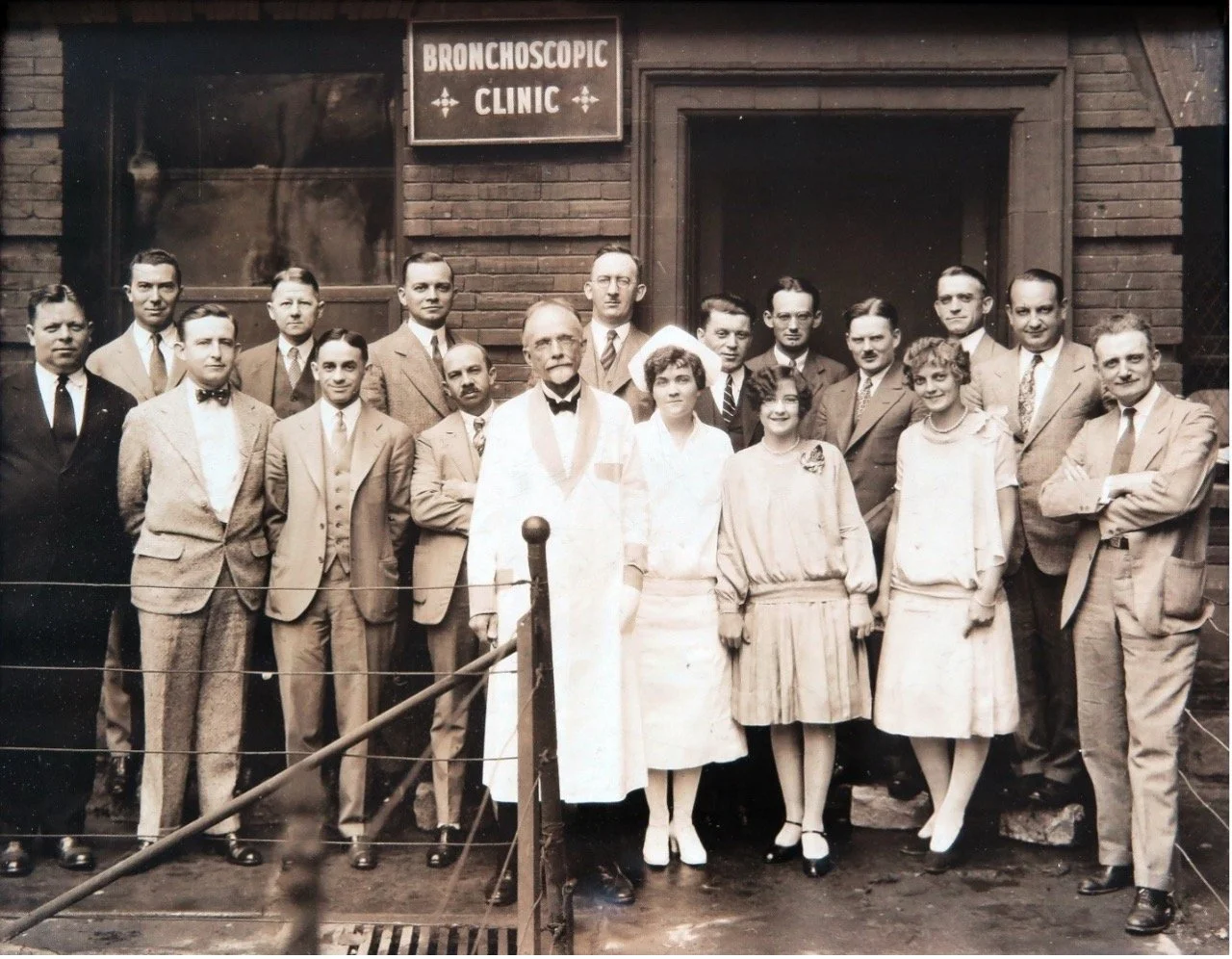
Jackson with his team at the University of Pennsylvania Graduate Hospital (Zeitels Collection)
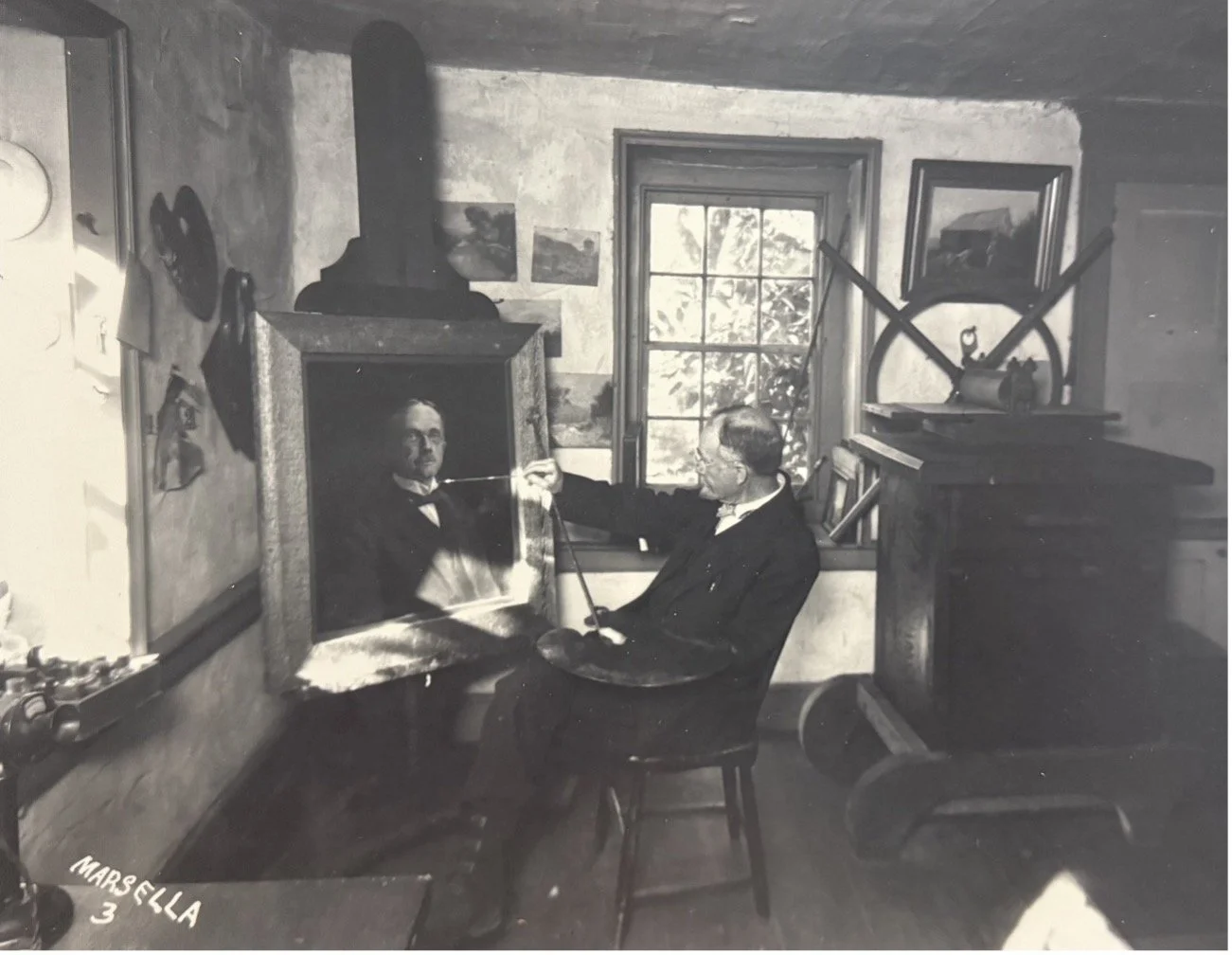
Jackson Painting (Zeitels Collection - gifted from Dr. John A. Tucker)
Jackson was a highly skilled designer of laryngoscopes, bronchoscopes, and esophagoscopes, and he established a strong professional relationship with the Pilling Corporation (established 1814 and still operating).
A thorough examination and evaluation of Jackson’s contributions, along with their broader significance, would require a full-length academic text. However, selected highlights of his unparalleled career as a humanitarian, individualist, innovator, educator, and disruptor are worth examining.
Among Jackson’s most distinguished accomplishments was his heroic effort to advocate for the prevention of upper aerodigestive tract injuries in children, which could potentially be fatal. He became world-renowned for his expertise in endoscopic removal of foreign bodies in pediatric patients, specifically those lodged in the larynx, pharynx, trachea, bronchi, esophagus, and stomach.
During that period, open surgical procedures with general anesthesia frequently resulted in high mortality rates. His contributions led to the successful treatment of thousands of children, significantly improving their survival and outcomes. Furthermore, his pioneering instrument designs substantially contributed to clinical practice by facilitating the development and implementation of more effective procedures.
Finally, Jackson was a tireless educator who, with his team, advanced surgeons’ skill sets from throughout the United States and abroad.